Artemia Embroidery Font Review
As a professional embroidery designer, I spend my days scrutinizing stitch paths, evaluating thread tension, and assessing how digital files translate into tangible products. When a new design asset enters the market, especially one marketed for small business merch, it isn't just about aesthetics; it is about viability. Today, I am reviewing the Artemia Embroidery Font, a digital file designed to help creators elevate their branded merchandise. With its compatibility with the popular PES format for Brother, Babylock, and other major machines, this font promises accessibility. But does it deliver the professional polish required for commercial applications like embroidered patches, staff uniforms, or boutique tote bags? Let us dive into the details.
First Impressions: Visual Personality and Brand Fit
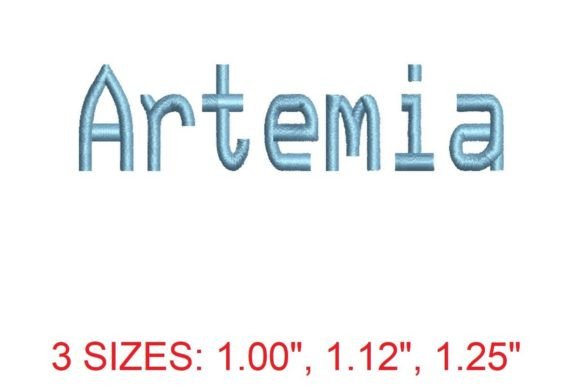
The moment you load the Artemia Embroidery Font into your digitizing software, the visual personality strikes. The name "Artemia" suggests something organic, perhaps slightly wild or nature-inspired, yet the description hints at an exquisite, refined quality. In practice, this font feels like a bridge between elegant modernism and approachable friendliness. It avoids the overly rigid structure of traditional serif fonts while steering clear of the chaotic energy of purely decorative script styles.
For small business owners—whether you run a local café, a handmade jewelry shop, or a creative studio—this balance is crucial. A brand identity needs to communicate professionalism without feeling sterile. Artemia achieves this by offering clean lines that remain legible even when scaled down. The curves feel fluid, suggesting a handmade product vibe that resonates well with consumers who value artisanal quality. Whether you are designing for a bakery’s custom aprons or a florist’s branded packaging accents, the font exudes a premium feel that elevates the perceived value of the finished product.
Real-World Business Applications
A design is only as good as its application. Here is how Artemia performs across various common commercial embroidery projects:
- Embroidered Patches: One of the most versatile uses for any embroidery file is the patch. Artemia’s balanced stroke weight holds up well on standard rectangular or circular patches. It works beautifully as a chest logo accent on work shirts or as a standalone mark on backpacks. The lettering remains distinct, ensuring that your brand name is readable from a distance.
- Staff Uniforms and Aprons: For service industry businesses, consistency is key. Using Artemia for staff uniforms creates a unified look. On canvas or cotton duck aprons, the font’s clean edges prevent the "muddy" look that can occur with overly complex scripts. It adds a touch of sophistication to functional wear, making employees look polished and put-together.
- Caps and Headwear: Cap embroidery presents unique challenges due to curved surfaces. Artemia’s moderate height and width proportions make it easier to hoop and embroider on structured caps without excessive distortion. It serves as an excellent front-center logo or a subtle side-panel detail.
- Tote Bags and Merch: In the world of Etsy sellers and craft fair vendors, tote bag design is a staple. Artemia looks stunning printed in bold, contrasting threads on natural canvas totes. It complements the rustic texture of the fabric without competing with it, creating a cohesive brand identity that customers want to carry around town.
- Product Packaging Accents: Beyond apparel, this font can be used on smaller items like hang tags, gift boxes, or product labels. The elegance of the typeface adds a layer of unboxing experience that encourages customer engagement and social media sharing.
Where to Exercise Caution
Even the best machine embroidery design has limitations. As an experienced designer, I must advise against using Artemia in scenarios where legibility might be compromised. Be cautious with the following applications:
- Small Patch Sizes: While Artemia is clean, extremely small patches (under 2 inches) may cause fine details to blur together. If you need tiny lettering for inner neck labels or minuscule accessories, test the file first. The stitch density must be sufficient to hold its shape but not so high that it puckers the fabric.
- Curved Surfaces and Tiny Lettering: Avoid placing text on highly curved areas like the brim of a soft cap or the narrow strap of a bag. The distortion can make the elegant curves of Artemia look uneven. Additionally, if you plan to use very small font sizes, ensure the outline stitches are robust enough to stand out.
- High Stitch Density Areas: If the design includes heavy fill stitches around the letters, be mindful of fabric texture. On delicate fabrics, dense stitching can cause damage or visible distortion. Always inspect spacing to ensure letters do not merge during the hooping process.
- Dark Uniforms and Textured Fabrics: Contrast is king. On dark uniforms, ensure you choose bright or light thread colors to maintain readability. Similarly, on heavily textured fabrics like tweed or bouclé, the definition of the font may be lost. Test on your actual production material whenever possible.
Impact on Brand Identity and Customer Trust
In the competitive landscape of custom apparel and design assets, visual consistency builds trust. Customers subconsciously associate the quality of your branding with the quality of your product. A sloppy, distorted, or illegible font screams amateur hour. In contrast, a well-executed digital embroidery file like Artemia signals attention to detail.
When a customer sees a neatly embroidered logo on a tote bag or a crisp monogram on an apron, it reinforces the idea that you care about the presentation. This finished product quality directly influences buyer engagement. It transforms a simple item of clothing into a piece of branded merchandise that people are proud to wear or use. By choosing a font that balances elegance with functionality, you are investing in the long-term recognition of your business.
Practical Designer Notes for Production
Before you commit to a large production run of Back To School supplies or holiday gifts, follow these essential steps to ensure success:
- Test in Black and White: Convert your design to black and white in your software to check the negative space and overall balance. This helps identify any awkward gaps or crowded areas that color might hide.
- Check Small Scale Performance: Zoom out to see how the design looks at actual patch size. Legibility at 1 inch is different than at 4 inches.
- Review Thread Color Contrast: Select thread colors that pop against your target fabric. High contrast ensures the brand identity remains sharp.
- Inspect Spacing and Hoop Size: Confirm that the hoop size accommodates your design comfortably. Tight hooping can lead to registration errors.
- Test on Real Fabric: Never assume a digital preview matches reality. Embroider a sample on the exact fabric you will use for production. Pay attention to how the fabric texture interacts with the stitches.
- Use Proper Stabilizer: The right stabilizer prevents puckering and maintains the integrity of the letterforms. Cut-away stabilizers are generally recommended for woven garments, while tear-away may suffice for stable home decor items.
- Create a Printable Mockup: Before cutting fabric, create a printable mockup to show clients or stakeholders. This allows for approval on visual placement and scale.
- Confirm Commercial Licensing: Most importantly, verify that you have the appropriate license for commercial embroidery. Ensure you are legally permitted to sell products made with this embroidery file.
The Artemia Embroidery Font is a strong contender for designers looking to add a touch of refined elegance to their small business merch. Its versatility across various applications—from apron embroidery to tote bag design—makes it a valuable addition to any design assets library. By understanding its strengths and respecting its limitations, you can create branded products that not only look beautiful but also drive business growth through professional presentation.